
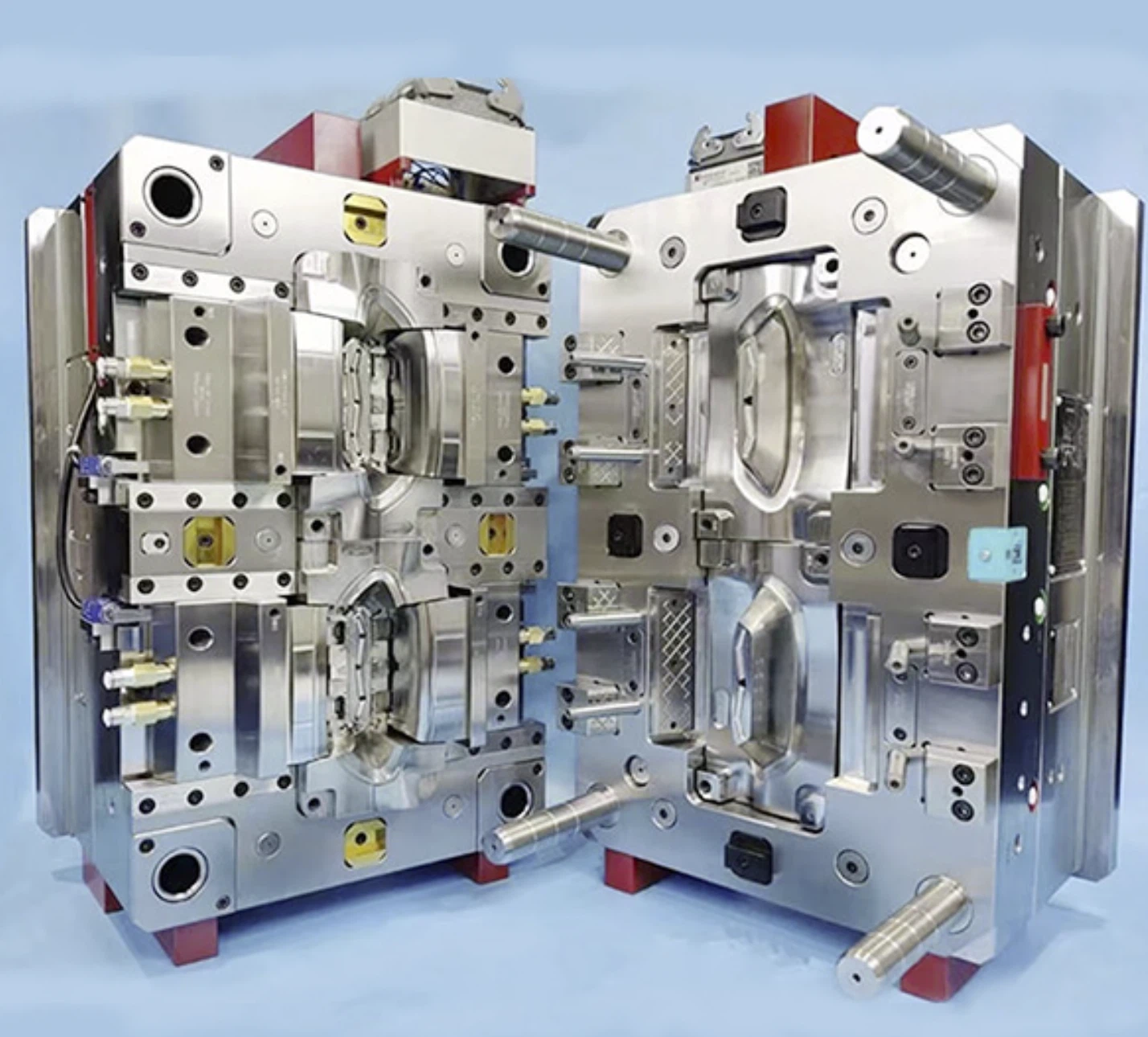
Tooling Design & Moldflow Analysis
High-quality mold design relies on hands-on experience and smooth communication—swift, accurate responses with actionable insights. We specialize in complex molds, turning project lessons into core expertise. Partnering with top clients has elevated our technical skills and service standards.
At ARTISAN, we work closely with clients to confirm key specs: mold steel, gate details, runner design, and complex two-stage ejection (e.g., multi-slides, angled lifters). We refine cooling, ejection and side-action details, and promptly flag production risks with practical advice.
Manufacturing
"A good mold manufacturing relies on qualified craftsmen and contemporary facilities" Artisan mould enhances the capability of project engineers and heads of mold makers by bi-weekly "case study forum"and"technical seminar"with specific topics.With those learning,our people are agile to do the right things and ask the right questions at first time,especially for complex mouldsARTISAN build all the molds to meet the highest customer standards for quality and reliability, designed to withstand high volume production with minimal maintenance.we always use mould bases and standard components such as LKM, DME, HASCO, PROGRESSIVE etc. and We always use high quality steels such as 1.2311,1.2738,1.2343 and 1.2344 from Saarstahl of Germany,718, 738, S136 and 8407 from ASSAB of Sweden, P20, 420 from USA and NAK80,SKD61 and SKD11 from DAIDO of Japan
Equipment List
| Machine name | Machine brand | Model | Tolerance | Quantity | |
| 1 | Precision Wire-cut | Sodick | AQ560 | ±0.002 mm | 1 |
| 2 | Precision Wire-cut | Sodick | AQ360 | ±0.002 mm | 2 |
| 3 | Precision Wire-cut | Sodick | ALN400 | ±0.002 mm | 3 |
| 4 | Precision CNC Machine | Keruisi | K540A | ±0.005 mm | 2 |
| 5 | Precision CNC Machine | DMG MORI | NV4000 | ±0.005 mm | 1 |
| 6 | Precision CNC Machine | DAHLIH | MCV860 | ±0.01 mm | 1 |
| 7 | Precision CNC Machine | CTIMES | 886 | ±0.01 mm | 1 |
| 8 | Precision EDM | Sodick | ALD32 | ±0.005 mm | 4 |
| 9 | Precision Surface Grinder | BENDAO | 8040 | ±0.005 mm | 1 |
| 10 | Precision Surface Grinder | BENDAO | 618 | ±0.001 mm | 2 |
| 11 | Surface Grinder | YUQING | 618S | ±0.001 mm | 2 |
| 12 | Coordinate Measuring Machine (CMM) | HEXAGON | 868 | ±0.001 mm | 1 |
| 13 | 2D Measuring Instrument | FENGKANG | 4030 | ±0.002 mm | 1 |
Tooling Trial
Effective mold testing revolves around three core goals: precision, performance, and stability. Leveraging our hands-on plastic mold expertise, we structure the process into three focused stages to pre-empt issues and ensure production readiness:
4.Simulation production
For the molds to be exported, we will operate them continuously for 4 hours according to the customer's parameter standards to ensure the stability and smooth operation of the molds.
Surface Polishing (Default Standard in ARTISAN):
Treatment
Grade
Core Standard
(Roughness Ra/μm)
Treatment
Method & Tool
Surface Effect
Category A (Ultra-high Polishing, Diamond
Polishing)
A-1:
0.012-0.025
#3
(6000-grit) diamond paste, fine polishing with wool buff; pre-removal of
previous processing marks is required
Optical-grade
mirror finish, no defects, high reflectivity
A-2: 0.025-0.05
#6
(3000-grit) diamond paste, polishing with wool buff; fewer processes than A-1
High-gloss
mirror finish, uniform reflectivity, no sanding marks
A-3: 0.05-0.10
#15
(1200-grit) diamond paste, polishing with wool buff; slight processing marks
are acceptable
Standard
mirror finish, slightly lower gloss than A-2, no obvious defects
Category B (High Polishing, Sandpaper Polishing)
B-1:
0.05-0.10
Cross-polishing
with 600-grit sandpaper, removal of previous oilstone marks, uniform pressure
Fine
semi-gloss, slight reflectivity, no obvious sanding marks
B-2: 0.10-0.15
Polishing
with 400-grit sandpaper, focusing on removing machining marks
Medium
semi-gloss, smooth touch, extremely faint processing marks visible
B-3: 0.28-0.32
Polishing
with 320-grit sandpaper, simple process, high efficiency
Low
semi-gloss, weak glossiness, delicate touch
Category C (Commercial Standard Polishing,
Oilstone Polishing)
C-1:
0.35-0.40
Grinding
and polishing with 600-grit oilstone, focusing on surface uniformity
Fine
matte finish, no reflectivity, soft touch
C-2: 0.45-0.55
Grinding
with 400-grit oilstone, capable of covering minor sink marks and other
defects
Medium
matte finish, uniform texture, able to hide small defects
C-3: 0.63-0.70
Rapid
grinding with 320-grit oilstone, no requirement for high finish
Standard
matte finish, slightly rough touch, low appearance requirements
Surface Texture(Default Standard in ARTISAN):
VDI3400 Grade
Ra (μm)
Sandpaper Grit
Before Texturing
Core Surface
Characteristics
Recommended
Draft Angle for General Plastics
VDI-18
0.8
800#
Matte finish with slightly visible
uniform texture
1.5°
VDI-21
1.12
800#
Matt finish with distinct texture
1.5° - 2°
VDI-24
1.6
600#
Visible EDM texture with slightly
rough touch
2°
VDI-27
2.24
600#
Enhanced roughness with initial
mechanical texture
2° - 2.5°
VDI-30
3.2
400#
Moderate roughness with clear EDM
texture
3°
VDI-33
4.5
400#
Rough texture with incipient pits
3° - 3.5°
VDI-36
6.3
320#
Extremely rough with obvious deep
texture
5°
If you use MoldTech texture standard, please feel free to contact me :-) .
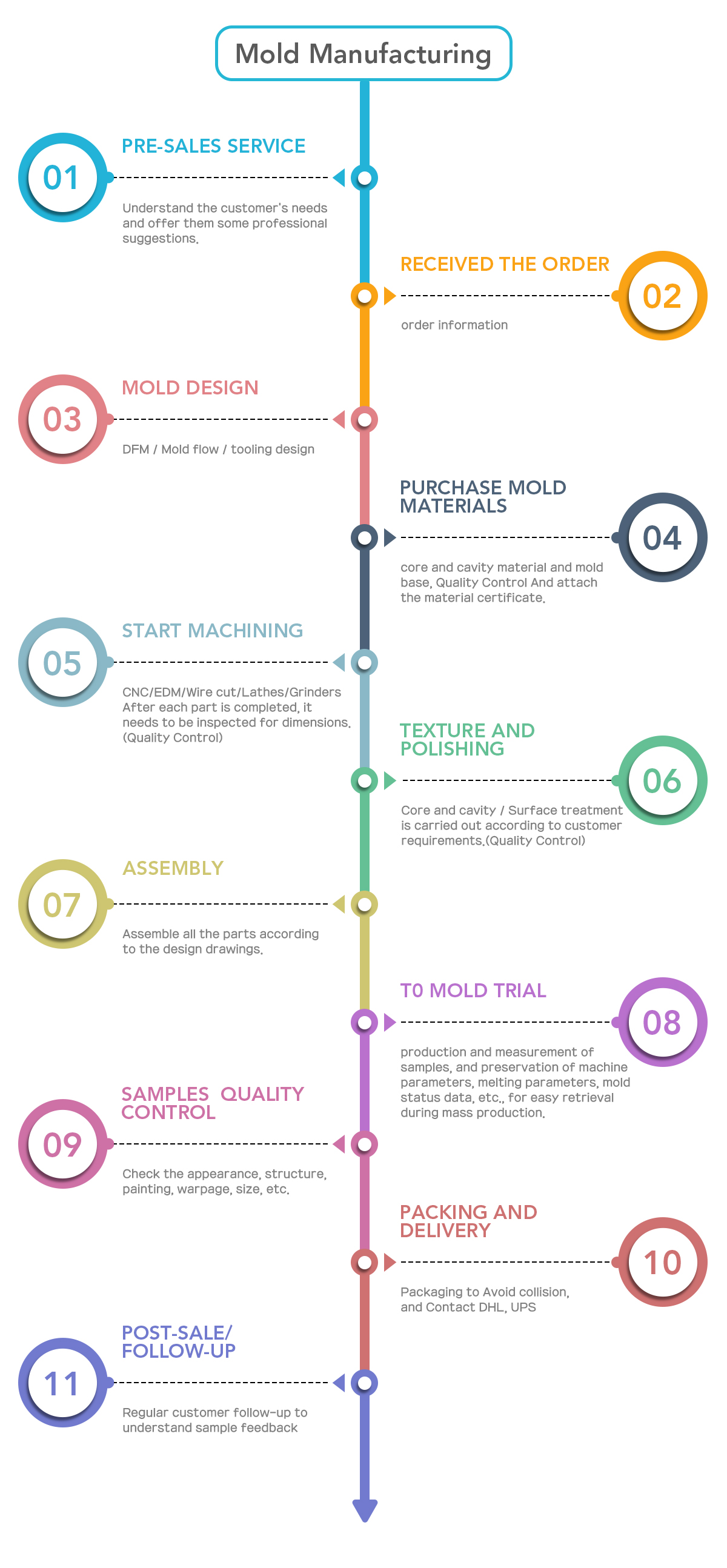
Operating Procedures:





 WhatsApp Us


 Deutsch
 Français
 Português
 Español
 العربية